
Androgenetic alopecia, also known as male pattern hair loss, is a common condition where men lose hair in a predictable pattern, usually starting at the temples and crown.
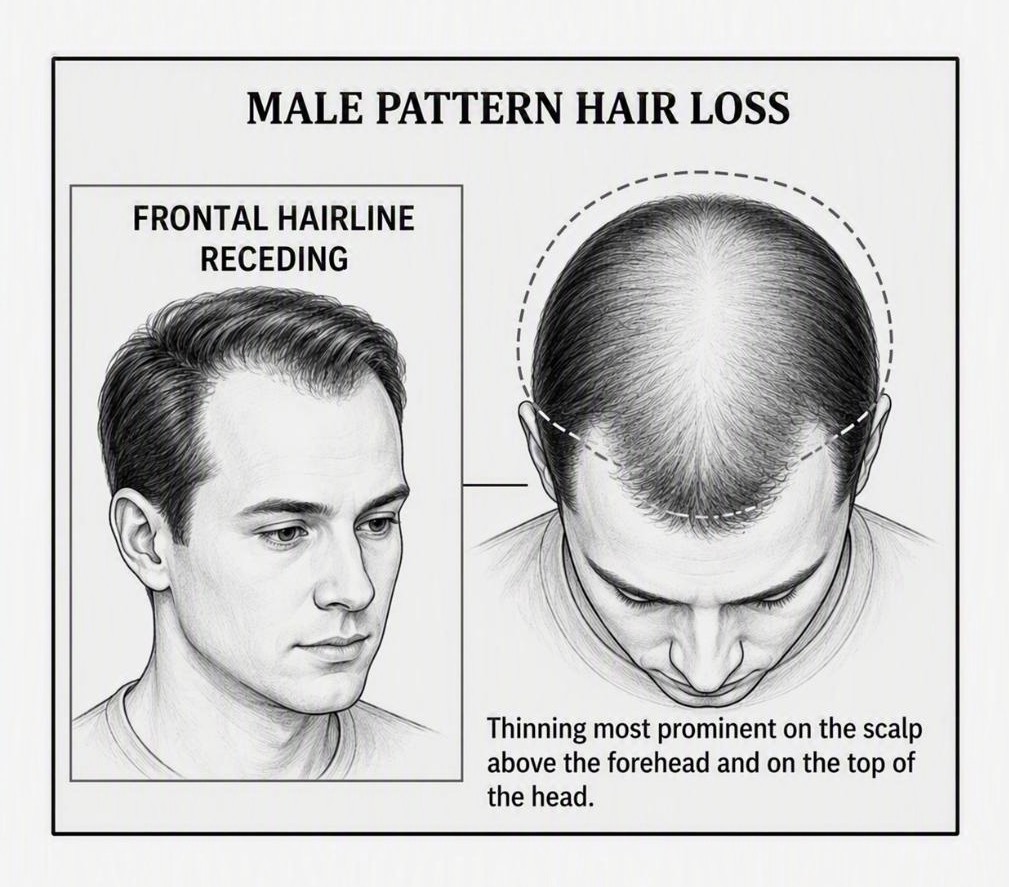
© 2026 Image created using Microsoft Copilot
Causes
Hair loss happens because of a mix of genetics (family history) and hormones, especially a hormone called DHT (a type of testosterone). DHT shrinks hair follicles, making hair thinner and shorter over time.
Signs
Hair thinning at the temples or top of the head.
A receding hairline, often forming an “M” shape.
Hair becoming finer or shorter over time.
Gradual balding on the crown.
No redness, itching, or pain (just hair loss).
Treatment
Hair loss treatments require consistent use over a period of time. It often takes 3 to 6 months before results become noticeable. Continued treatment is necessary to maintain hair regrowth.
Options include:
Topical Minoxidil (Rogaine®) Available as a foam or solution. It is applied to the scalp to slow hair loss and encourage regrowth.
Oral Medicines
Oral minoxidil
Finasteride (Propecia)
Additional Options
Hair transplant surgery
Low-level light therapy (caps, combs, or helmets)
Platelet-Rich Plasma (some people see improvement, but more studies are needed)
Home Care Tips
Use gentle shampoos and avoid harsh hair products.
Be consistent with your treatment. Missing doses may reduce results.
Protect your scalp from sunburn. Wear a hat or use sunscreen on the scalp.
Avoid tight hairstyles that pull on the hair.
Additional Information
Learn more at: https://www.aad.org/public/diseases/hair-loss/treatment/male-pattern-hair-loss-treatment.