Notice
Welcome Beaver Dam patients! For information about the transition to UW Health, please review our frequently asked questions page.Read more
Welcome Beaver Dam patients! For information about the transition to UW Health, please review our frequently asked questions page.Read more

This handout explains retinal detachment symptoms and treatment options. Retinal detachment starts when the vitreous pulls away from the retina and causes a small tear. When the retina pulls away, your vision is lost or impaired.
The retina lines the back wall of your eye. It is a thin layer of cells that sense light and tell the brain what you see. The vitreous is a gel-like substance that sits in front of the retina and between the retina and the lens that fills the center of the eye. When the retina detaches, fluid moves through the tear and lifts the retina off the back wall of the eye.
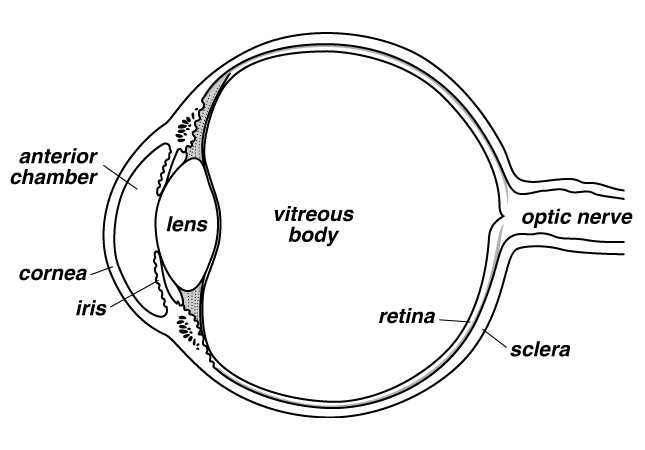
It can happen to anyone, but your risk is higher if you:
Are 50 or older.
Had cataract surgery.
Are very nearsighted.
Had an eye injury.
Call your eye doctor right away if you notice any of the symptoms below.:
Light “flashes” and blurred vision
A “veil” or shadow over part of your field of vision
Large “floaters” or spots that travel across your field of vision.
Laser treatment can heal small holes and tears and very small, detached retinas in the doctor’s office.
Laser photocoagulation uses pinpoints of laser light to create tiny burns around the hole to “weld” the retina back to the wall of the eye.
Cryopexy is much the same, but instead of using heat, it freezes the area around the hole.
If a lot of fluid moves through the tear, a large detachment can form. In that case, you may need surgery. To fix the detachment, the surgeon seals the tear. They may place a gas bubble in the eye to press the retina back into place then use laser or freezing treatment to seal around the tear.
We may also use a scleral buckle. This is a silicone band that we place around the eye. It pushes the outer wall inward to help the retina reattach. The surgeon may also drain the fluid under the retina.
In many cases, the surgeon removes the gel of the eye with vitrectomy surgery. The surgeon then uses a gas bubble and laser to help seal the retina and hold it in place.
Most detached retinas can be repaired, but this does not mean your vision will return to the way it was. You may have some loss in the quality of your vision. If the problem is treated early, the chance of better sight is higher. If the retina cannot be reattached, your vision will get worse and may be lost for good. When to Call
Call if you have any questions or concerns.
University Station Eye Clinic
Monday—Friday
8 am to 4:30 pm
(608) 916-2020 or 1-800-323-8942
After hours, your call will be sent to the paging operator. Ask for the “eye resident on call.” Give your name and phone number with area code. The doctor will call you back.