
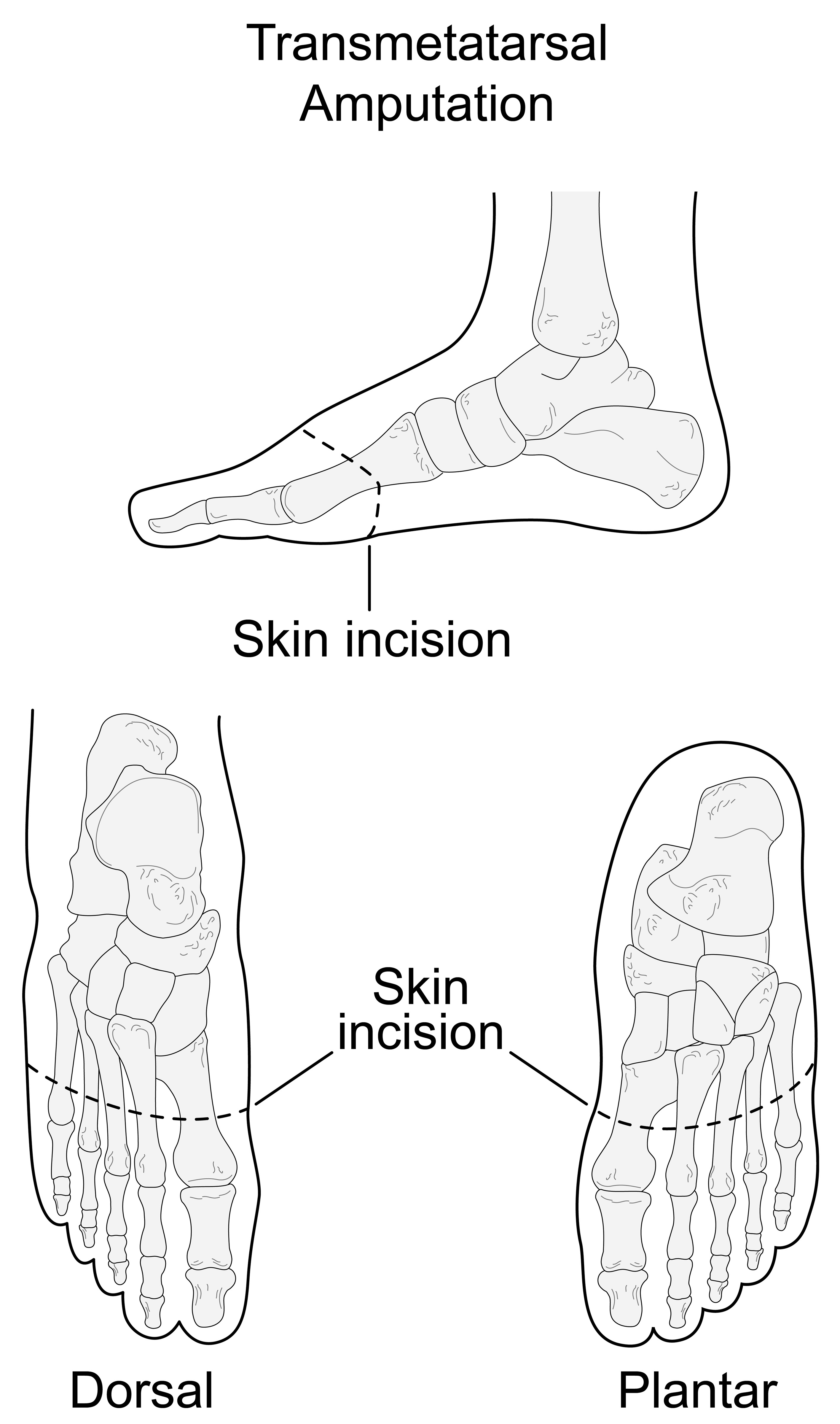
Transmetatarsal amputation (TMA) is a surgery to remove part of your foot. You may need a TMA if you have poor blood flow to your foot or a severe infection.
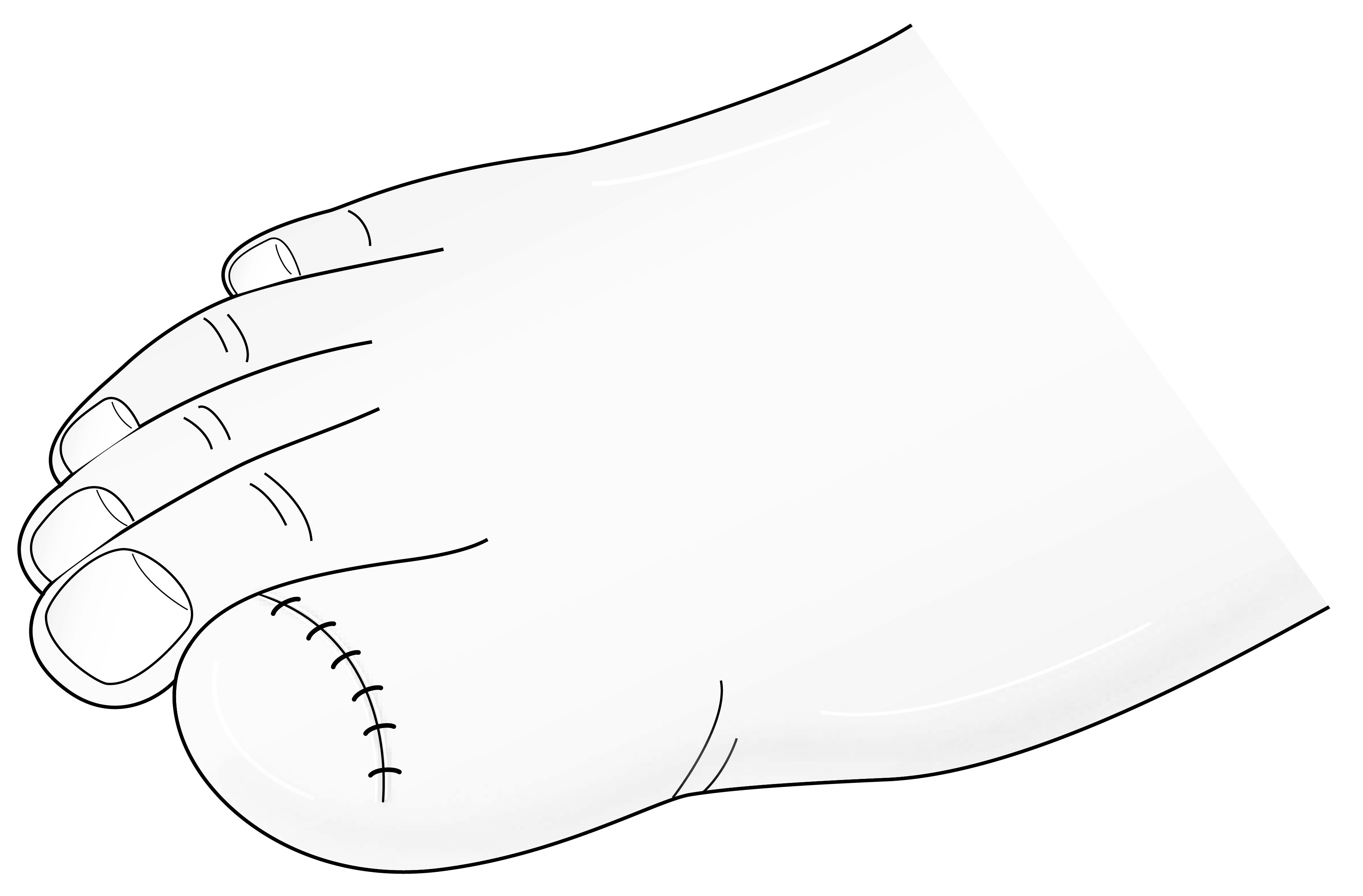
A toe amputation is a surgery to remove one or more toes.

Incision Care
When you leave the hospital, your incision will most likely be closed with stitches or staples. Your provider will remove them at a follow-up visit.
Clean your incision every day with warm water and a mild, fragrance-free soap. Gently wash the area with a clean washcloth or gauze. Do not scrub. Rinse well and gently pat dry. Let the incision and the skin around it dry before putting on a dressing.
Unless your provider gives you other instructions, loosely wrap your foot with dry gauze.
Do not soak your foot in a bathtub, swimming pool, or hot tub until your provider says it is safe. Do not place lotion,
alcohol, powder, or oil on the incision.
Pain Control
It is normal to have some pain at the suture line and in your foot after surgery. Your provider has prescribed pain medicine for you to use at home. This is often the same medicine that you have been getting in the hospital.
As healing occurs, your pain will improve and you will need less pain medicine. Ask your provider which over-the-counter medicine is safe for you to take.
Diet
It is common to have less appetite and lose some weight after surgery. Even if you do not feel hungry, try to eat well to help your body heal. Many people find it easier to eat 5-6 small meals each day instead of 3 large meals.
The most common problem after going home is not drinking enough fluids. Not getting enough fluids can make you feel tired and weak and can slow healing. Follow these tips to stay hydrated and support recovery:
Drink at least 8-10 glasses (8 ounces each) of water or juice every day
Avoid drinks with caffeine, such as coffee, tea, and some sodas, because they can cause your body to lose fluids
To help prevent constipation, eat at least 3 foods high in fiber each day. Good choices include fruits and vegetables, such as apples, dates, beans, peas, prunes, and prune juice. Whole grains, such as oatmeal, bran cereals, and whole grain breads, are also good sources of fiber.
Activity
It is normal to feel more tired than usual after surgery. Your energy and strength will improve over time. Staying active can help you regain strength and prevent constipation. Try to be as active as you can while making sure to rest when you need to. Slowly increase your activity each day.
When sitting or lying down, keep your legs raised above the level of your heart when possible. This can help reduce swelling.
Follow your provider's instructions about walking and putting weight on your foot. You may need to wear a special shoe that lets you put weight on your heel only. In some cases, you may need to keep all weight off your foot until your provider tells you it is safe.
Smoking
Try to quit smoking. Smoking delays wound healing and can decrease blood flow, shrink arteries, and raise your blood pressure. If you would like help quitting, call the Quit Line: 1-800-QUITNOW (784-8669).
Poor Blood Flow to the Legs and Feet
You are more likely to have poor blood flow to your legs and feet if you:
Smoke
Are over age 50
Have high blood pressure
Have high cholesterol
Have diabetes
Do not exercise
Have heart disease in your family
Taking Care of Legs and Feet with Poor Blood Flow
Look at your legs and feet daily for sores, scratches, cracks, blisters, and redness. Report them to your provider or nurse.
Wash your legs and feet daily with mild soap and water. Avoid soaking. Dry well.
Put lotion on dry skin daily.
Let a provider or nurse clip your toenails or show you how to clip them.
Wear shoes that fit well.
Wear white cotton or wool socks.
Check shoes and socks for stones, sharp things, or holes.
Do not use heating pads or hot water bottles on legs or feet.
Never go barefoot.
When to Call
Check the amputation site every day. Call your provider if you notice:
An increase in redness or warmth at the amputation site.
Red streaks on your skin that extend from the site where the stitches are.
Bulging or swelling at the incision.
New drainage or bleeding from your incision.
Open spots between the stitches where the skin is pulling apart.
A fever higher than 101.5°F (38.5°C) by mouth for two readings taken 4 hours apart.
The skin along the incision is getting darker or turning black.
Who to Call
If you have questions, please contact your provider through MyChart or call your provider listed in your After Visit Summary or After Hospital Care Plan. For a list of UW Health Clinics, visit www.uwhealth.org/.